SEO, AEO and GEO Explained: How to Get Found in Google and AI Search
What SEO, answer engine optimization (AEO) and generative engine optimization (GEO) mean, how they differ, and how to be visible in AI answers.
 CogniSoft TeamIT staffing & IT services expertsPublished 7 min read
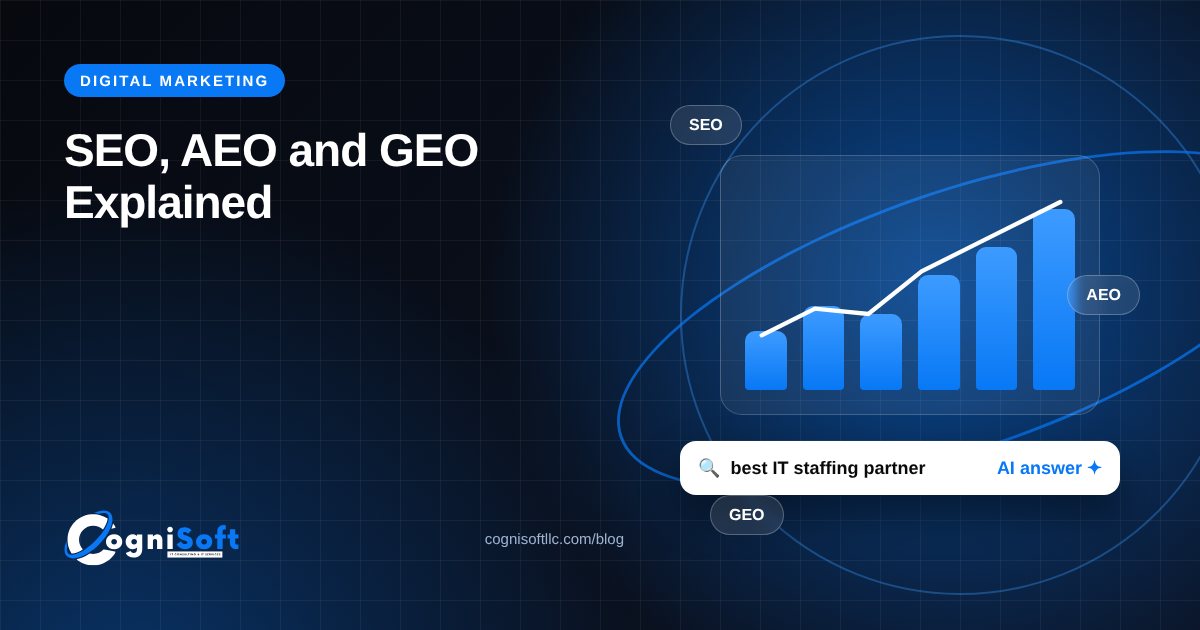
SEO (search engine optimization) helps your pages rank in traditional search results; AEO (answer engine optimization) structures content so it can be pulled into direct answers, featured snippets and voice results; GEO (generative engine optimization) makes your brand and content easy for AI assistants to understand, trust and cite. All three rely on helpful, well-structured, accurate content with clear entities and technical health.
Key takeaways
- SEO earns rankings; AEO earns direct answers; GEO earns citations in AI responses.
- Lead each page or section with a concise, direct answer.
- Use structured data (Organization, FAQ, Article) and consistent business details.
- Original, expert content and clear authorship build trust with all three.
SEO: the foundation
Search engine optimization covers technical health (crawlable pages, fast load, mobile-friendly, clean URLs, sitemaps), on-page relevance (titles, headings, content that matches intent) and authority (links and mentions from reputable sites).
AEO: be the answer
Answer engine optimization focuses on questions. Put a two- to three-sentence answer directly under a question-style heading, use lists and tables for steps and comparisons, and add FAQ sections with FAQPage structured data. This format is easy for featured snippets and voice assistants to quote.
GEO: be cited by AI assistants
Generative engines summarize information from many sources. To be included and cited:
- State facts clearly and consistently — company name, services, location, contact details.
- Publish original expertise: process explanations, checklists, real examples.
- Use descriptive headings and short, self-contained paragraphs that make sense when quoted alone.
- Keep structured data and an
llms.txtsummary that describe who you are and what you offer. - Earn mentions on reputable third-party sites, directories and reviews.
A practical checklist
- Unique title and meta description on every page.
- One H1, logical H2/H3 structure, descriptive internal links.
- Direct answer paragraph at the top of key pages and posts.
- FAQ section with structured data where questions are common.
- Organization/LocalBusiness schema with consistent name, address and phone.
- XML sitemap, robots.txt and fast, mobile-friendly pages.
- Fresh content that demonstrates first-hand experience.
This website was built with these principles. Want the same for yours? See our digital marketing services.
Frequently asked questions
What is the difference between AEO and GEO?
AEO targets direct answers in search features and voice assistants, usually by formatting content as clear question-and-answer pairs. GEO targets generative AI assistants that write answers from multiple sources, aiming for your brand and content to be understood, trusted and cited.
Does SEO still matter with AI search?
Yes. AI assistants and answer engines draw heavily on content that is already crawlable, well-structured and authoritative, which is exactly what SEO builds.
Does CogniSoft offer SEO, AEO and GEO services?
Yes, as part of our digital marketing services alongside paid media, social and content. Email hr@cognisoftllc.com.
Need help with this?
Talk to CogniSoft about IT staffing, career services, web & app development or digital marketing. Email hr@cognisoftllc.com or call +1 (307) 529-0408.
The CogniSoft Team combines IT recruiters, career coaches, developers and digital marketers based in Sheridan, Wyoming. We write practical guides from our day-to-day work helping professionals get hired and businesses grow.